Going Dark Was the Best Career Move They Never Announced
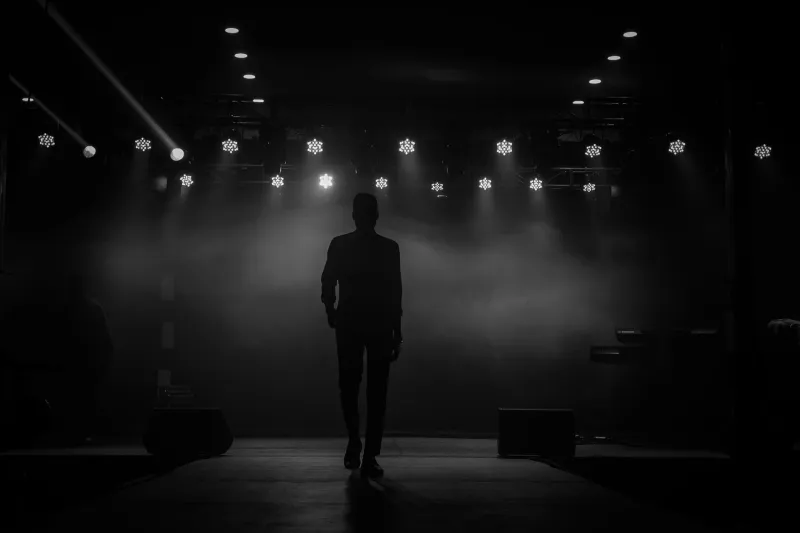
Everybody's talking about the grind. Post every day. Show up on Stories. Go live. Drop content like it's a second job — because for most creators, it literally is. The algorithm punishes absence, or so the gospel goes. But here's the thing nobody's saying loud enough: some of the most magnetic figures in entertainment right now didn't build their mystique by being everywhere. They built it by disappearing at exactly the right moment.
Strategic silence is having a quiet renaissance, and most people are too busy posting to notice.
The Fear That Keeps the Feed Full
Let's be honest about what's really driving the nonstop output machine. It's not passion. It's not even strategy most of the time. It's fear — plain, unfiltered fear of being forgotten. Creators will grind themselves into the ground before they'll risk going a week without a post, because somewhere along the way, relevance got confused with visibility.
But visibility and relevance aren't the same thing. Never were.
When you're everywhere, you become wallpaper. People scroll past you the same way they scroll past every other thumbnail in the feed. Familiarity breeds indifference, not loyalty. And that's the trap — the more you show up trying to stay top of mind, the easier it gets for audiences to tune you out entirely.
The creators who've figured this out? They're playing a completely different game.
What Actually Happens When Someone Goes Quiet
Think about the last time a musician you liked just... vanished for a year or two. No press runs, no social posts, no cryptic hints. Just gone. What did you do? You probably thought about them more, not less. You wondered what they were working on. You revisited old stuff. You talked about them with friends. The absence created a conversation that constant content never could.
That's not an accident. That's narrative.
When someone steps back from the spotlight deliberately — and the keyword here is deliberately — they shift from being a content producer to being a story. Audiences don't just consume stories, they participate in them. They theorize, speculate, and invest emotionally in what comes next. The gap becomes the plot.
Adele did this before 25 dropped. Beyoncé has weaponized silence so effectively that a single Instagram post with no caption can break the internet. Even on the YouTube side of things, creators who've taken extended breaks often come back to their most-watched videos, their most engaged comment sections, their most loyal audiences — because the people who stuck around during the quiet weren't casual followers. They were fans.
The Difference Between Burning Out and Stepping Back
Here's where it gets nuanced, because not every disappearing act is strategic. Some creators go quiet because they're exhausted, overwhelmed, or dealing with something deeply personal. That's not a power move — that's survival. And there's absolutely nothing wrong with it.
But there's a real difference between collapsing under the weight of the content cycle and consciously choosing to step away with intention. One is reactive. The other is a decision.
The creators who turn absence into an asset are the ones who understand their own narrative well enough to know when a pause serves the story. They've built enough of a foundation that a break doesn't erase them — it deepens the mythology. And when they come back, they're not just returning. They're arriving.
That kind of re-entry hits different. Audiences feel it. The energy is different. There's something to talk about again.
How to Actually Pull This Off Without Tanking Your Momentum
Okay, so you're not Beyoncé. Fair. But the principle scales down further than most people think.
The key is framing. If you just stop posting with no context, people will assume the worst — burnout, drama, a brand deal gone sideways. But if you signal intentionality, even vaguely, the audience reads it differently. A single post that says you're stepping back to work on something bigger plants a seed. It gives people something to wait for.
From there, the rules are simple:
Actually use the time. Don't go quiet and then waste the break scrolling other people's content in a spiral of comparison. Create something. Develop something. Grow in a direction your audience hasn't seen yet. The comeback only lands if there's something real on the other side of it.
Let the absence breathe. Resist the urge to pop back in with a quick Reel just to remind people you exist. Every time you break the silence prematurely, you undercut the mystique you're building. Trust the gap.
Come back with a point of view. The worst thing you can do is return and immediately resume business as usual. The re-entry should feel like a shift — a new chapter, not a continuation of the last one. Give your audience a reason to say, oh, something's different here.
Irrelevance Is Not the Enemy — Mediocrity Is
Here's the reframe that changes everything: you don't go irrelevant because you disappear. You go irrelevant because you keep showing up with nothing meaningful to say.
Audiences are smarter than the content industry gives them credit for. They can feel when a creator is posting out of obligation versus creating from a place of genuine energy. Filler content doesn't just underperform — it actively erodes trust. People start to associate your name with noise instead of signal.
A well-timed silence, on the other hand, resets that association. It says, I only show up when I have something worth your attention. That's a brand promise that's incredibly hard to fake and incredibly powerful when it's real.
In the age of infinite content, scarcity is the flex. Not artificial scarcity, not manufactured drama — just the quiet confidence of someone who knows their absence is as intentional as their presence.
The Comeback Arc Is Already Written
The most compelling entertainment figures have always understood that a career isn't a content calendar. It's a narrative. And every great narrative has moments of tension, uncertainty, and silence before the next act begins.
You don't have to be a superstar to apply this. You just have to be willing to trust that the people who are genuinely invested in what you do will still be there when you come back — and that the ones who weren't willing to wait probably weren't your audience anyway.
Go dark when it serves the story. Come back when you've got something real. That's not a disappearing act. That's a career move.