Disappear to Win: How the Smartest Entertainers Turn Absence Into Their Greatest Power Move
There's this unspoken rule in the content game that says you have to stay visible at all costs. Post every day. Go live. Drop something every week. Keep your name in the feed or risk being forgotten forever. It's exhausting just reading it — and for a lot of creators and performers, living it eventually breaks them.
But here's the thing nobody's putting on their motivational carousel: some of the biggest career revivals in entertainment didn't happen because someone hustled harder. They happened because someone had the guts — or the wisdom, or honestly sometimes just the necessity — to walk away for a while.
And then they came back, and the world lost its mind.
The Oversaturation Problem Is Very Real
Let's be honest about something. When you see someone's content every single day, they start to feel less like a creator you love and more like furniture. Familiar. Comfortable. Easy to ignore.
That's not a knock on consistency — consistency matters. But there's a ceiling to how much any audience can genuinely invest in one person when that person is everywhere, all the time. Attention is a finite resource, and when fans feel like they've already gotten everything you have to offer, the hunger disappears.
The psychology here is pretty well-documented. Scarcity drives desire. It's the same reason limited-edition drops sell out in minutes and why a restaurant that's hard to get into always seems more appealing than the one with a table ready immediately. When access feels unlimited, perceived value drops. When access suddenly gets cut off? People notice. People want.
Creators who understand this dynamic — whether instinctively or strategically — have a serious advantage over those who are just grinding without a plan.
What "Calculated Absence" Actually Looks Like
There's a difference between ghosting your audience out of burnout (which, to be clear, is completely valid and human) and making a deliberate choice to pull back in order to come back stronger. The outcome can look similar from the outside, but the intention shapes everything about how the return lands.
A calculated absence usually involves a few key elements. First, there's some kind of signal — not always explicit, but enough that the audience registers something is shifting. Maybe posting slows down. Maybe a creator goes quiet on their most active platform. Maybe there's a cryptic final message. That signal plants a seed.
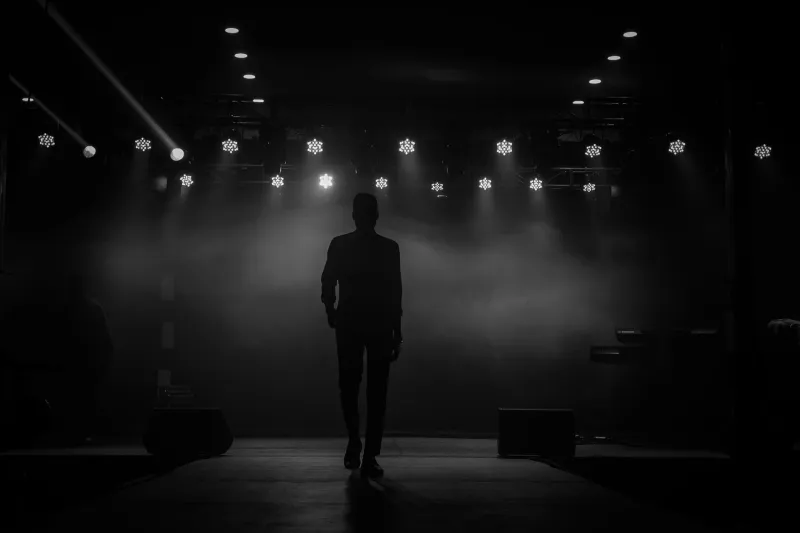
Then comes the silence. And silence, in a media landscape that never shuts up, is loud. Fans start talking. Speculation builds. Old content gets revisited. People who never cared before start asking questions because the mystery is magnetic.
And then — when the timing is right — the return. And if it's handled well, it doesn't just pick up where things left off. It resets the entire relationship between the creator and their audience.
The Fan Psychology Nobody Talks About Enough
Here's something worth sitting with: fans often develop a deeper emotional connection to someone during their absence than they ever did during consistent activity.
When a creator is always present, the relationship can feel passive. You consume, they produce, repeat. But when someone disappears, fans become active participants in the narrative. They theorize. They rewatch. They defend their favorite in comment sections. They create fan content. They become invested in a way that daily posting rarely produces.
By the time the return happens, those fans aren't just waiting — they're ready. They've done the emotional work of missing someone, and that feeling creates a loyalty that's incredibly hard to manufacture through any content strategy.
It's the difference between someone you see every day at the office and an old friend who moves across the country and comes back for a visit. One relationship is routine. The other feels like an event.
Real Examples That Prove the Point
You don't have to look hard to find entertainers who lived this out. Adele's extended gaps between albums have become almost as famous as the albums themselves — and every return has been a cultural moment that dominated headlines for weeks. She doesn't flood the market. She shows up when she has something worth saying, and the world stops to listen.
On the internet side of things, plenty of YouTubers and streamers who stepped back — sometimes for mental health, sometimes for creative reset, sometimes just because they needed air — have come back to audiences that were more engaged, not less. The comment sections on return videos are almost always electric in a way that regular upload comments rarely are.
Even in music, artists who go dark between projects tend to generate more anticipation than those who are constantly releasing loosies and features. There's something to be said for making your audience wait.
The Risk Is Real, But So Is the Reward
None of this is a guarantee, and it'd be irresponsible to pretend otherwise. Not every absence ends in a triumphant return. Some creators step away and the algorithm simply moves on. Some audiences don't wait around. The entertainment space doesn't pause for anyone.
But the creators who come back successfully tend to have a few things in common. They return with something — a new project, a new perspective, a new energy that signals growth rather than just a reappearance. They don't come back and pick up exactly where they left off as if no time has passed. They acknowledge the gap, lean into it, and make it part of the story.
Because that's ultimately what this is about. Storytelling. The best entertainers understand that their career is a narrative, not just a content calendar. And every great story has moments of tension, silence, and uncertainty before the payoff.
What This Means If You're Building Something
If you're a creator reading this and you're feeling the weight of the always-on grind, here's the reframe worth considering: stepping back isn't failure. It might actually be strategy.
That doesn't mean disappearing without a plan or abandoning your community without care. But it does mean that protecting your creative energy, taking the time to actually build something worth returning with, and trusting that an audience who genuinely connects with you will still be there — that's not weakness. That's long-game thinking.
The entertainers who last aren't always the ones who never stopped. Sometimes they're the ones who knew exactly when to pause — and exactly when to come back swinging.
Silence, used right, isn't the end of the story. It's the setup for the best chapter yet.