The Camera Is Always Rolling — Until You Break
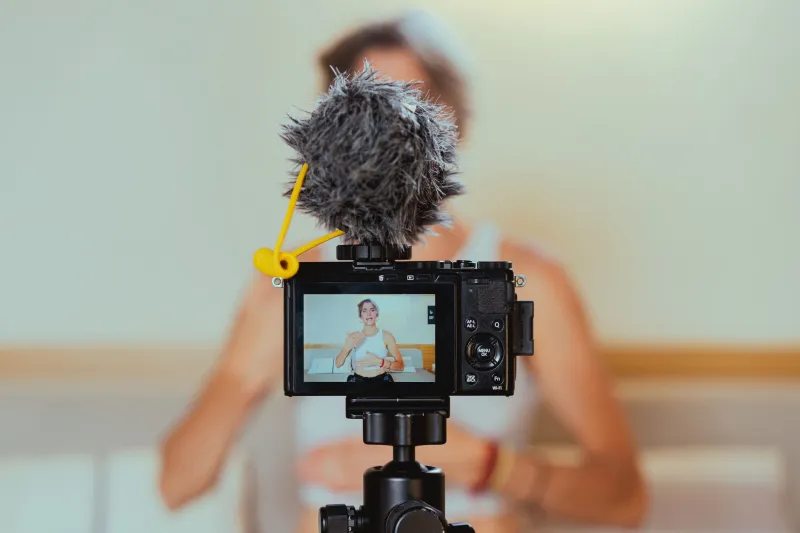
There's a moment a lot of creators describe but rarely post about. It usually happens somewhere mundane — sitting in a parking lot, or standing in a grocery store aisle — when you realize you've mentally started scripting what's happening around you into content before you've even experienced it yourself. You're not living the moment. You're producing it.
For some people, that realization is exciting. For a growing number, it's the first sign that something has gone seriously wrong.
The always-on content model — the one that rewards consistency, oversharing, and constant audience engagement — has created a generation of creators who are, by any reasonable measure, exhausted. Not just tired. Actually, deeply burned out in ways that don't always show up on camera because, well, showing up on camera is kind of the whole job.
The Grind Looks Different From the Inside
From the outside, being a full-time content creator looks like freedom. You set your own schedule. You work in your pajamas. You get to talk about things you actually care about. And sure — for a lot of people, that part is real.
What the highlight reel doesn't show is the relentless pressure of the content calendar. The anxiety that spikes when engagement drops. The creeping guilt of taking a day off. The way your brain starts treating every personal experience — a difficult conversation with a family member, a health scare, a moment of genuine grief — as potential material.
Multiple creators who've taken extended breaks in recent years have described something similar: a period of disorientation when they first stepped away, followed by the unsettling realization of how much of their internal life had been outsourced to their audience. When you stop performing your life for other people, you have to actually live it — and that transition can feel stranger than it sounds.
One creator who took a three-month hiatus after nearly a decade of daily posting put it plainly: she didn't know what she actually thought about things anymore. Every opinion she'd formed in the past few years had been shaped, at least in part, by how she expected her audience to receive it. Offline, without the feedback loop, she had to start figuring that out from scratch.
Why We Can't Stop Anyway
Here's the uncomfortable part: the always-on model isn't just a business strategy. It's also genuinely addictive.
The engagement loop — post something, watch the responses roll in, feel validated, post again — triggers the same dopamine pathways as other reward-based behaviors. And unlike a lot of addictions, this one has a financial justification built right in. You're not just doom-scrolling. You're working. You're building something. The algorithm rewards consistency, so taking a break feels like self-sabotage.
And then there's the audience itself. When thousands of people are checking in on you daily, disappearing without explanation feels irresponsible. You've built relationships — or something that functions like relationships — and those people genuinely worry when you go quiet. That sense of obligation is real, even if the dynamic is complicated.
So creators push through. They film when they're sick. They post when they're grieving. They manufacture energy they don't have because the alternative — silence — feels like failure.
What the Break Actually Teaches You
The creators who've stepped back and talked honestly about it tend to describe the experience in two phases.
The first phase is rough. There's guilt, anxiety, and an almost compulsive urge to check metrics even when you're not posting. Some describe feeling like they've lost their identity, because so much of who they'd become was tied up in being the person who made the content.
The second phase — which usually kicks in somewhere around the four to six week mark — is something closer to clarity. Sleep improves. Conversations with friends feel different when you're not half-thinking about how to turn them into a story. You start noticing what you actually enjoy versus what you've just been performing enjoyment of for an audience.
Several creators have come back from extended breaks and fundamentally changed how they operate — posting less frequently, drawing clearer lines between their public and private lives, and building content around genuine enthusiasm rather than obligation. Interestingly, many of them report that their audiences responded positively, not negatively. Turns out, when you stop grinding for the sake of it and only show up when you have something real to say, the quality of what you make tends to go up.
Practical Ways to Stay Sane in an Always-On World
None of this means you have to quit. But it does mean you need a strategy that doesn't treat your mental health as a renewable resource.
Build in dead zones. Designate specific times — even just a few hours a day — where you are genuinely offline. No filming, no drafting captions in your head, no checking stats. The world will not end.
Separate the person from the persona. Your content brand is a character you play, even when that character is very close to who you actually are. Not every experience in your life belongs to that character. Some things get to just be yours.
Batch and bank. Creating content in focused bursts and scheduling it out removes the pressure of daily output without sacrificing consistency. Your audience doesn't need to know whether you filmed something yesterday or three weeks ago.
Talk to someone who isn't your audience. Therapy, a trusted friend outside the creator space, a mentor — someone who will give you honest feedback that isn't filtered through a parasocial lens. The echo chamber of audience validation, however warm it feels, is not a substitute for real perspective.
Let the metrics be what they are. Engagement fluctuates. Algorithms change. Building your sense of self-worth around numbers that shift for reasons largely outside your control is a recipe for a very specific kind of misery.
The Realest Take
The always-on model isn't going anywhere. The demand for constant content, constant connection, constant access — that's the world we're in, and pretending otherwise doesn't help anyone.
But the creators who are going to last — the ones building something with actual staying power — are the ones who figure out how to be present without being consumed. Who understand that their most valuable creative asset isn't their posting schedule or their follower count. It's their perspective. And perspectives need space, rest, and actual lived experience to stay sharp.
You can't document a life you're not actually living. At some point, the camera has to go down.
What you find when it does might surprise you.