48 Hours, No Posts, No Notifications — Here's What Actually Happens
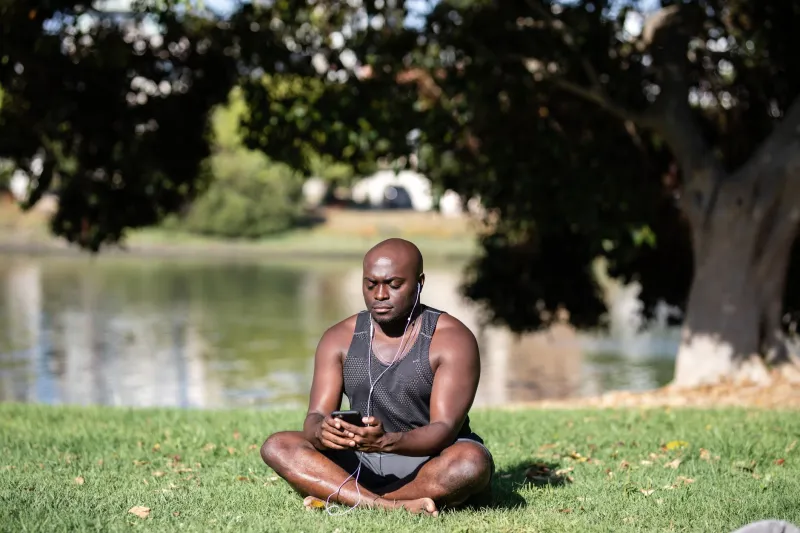
Day one, hour three. The phone is face-down on the nightstand. No posting. No checking. No lurking in other people's comment sections to feel productive. Just... nothing.
For most creators, that sentence reads like a horror story.
Being online isn't just part of the job — it is the job. Your presence is your product. Your consistency is your credibility. Every hour you're not posting is theoretically an hour someone else is posting instead, and the algorithm is definitely not waiting around for you to get your head right.
Except here's the thing: that narrative, as convincing as it feels at 11 PM when you're forcing yourself to film a video you have zero energy for, is not entirely true. And the creators who've figured that out are doing something the rest of the industry hasn't fully caught up to yet.
They're logging off on purpose.
Why the "Always On" Model Is Quietly Breaking People
Let's set the scene. The average content creator — someone running a mid-size channel or account, not a mega-celebrity with a full team — is essentially working a 24/7 job with no guaranteed income, no PTO, and a performance review that happens in real time via engagement metrics.
Every dip in views feels personal. Every slow week triggers a spiral about relevance. And because the platforms are designed to reward constant output, the incentive is always to push through, post anyway, keep the machine running even when you're running on fumes.
The result? Content that feels hollow. Audiences that can tell you're phoning it in, even if they can't articulate why. And creators who are burning through their creative reserves faster than they're replenishing them.
A 48-hour detox isn't a vacation. It's maintenance.
What a Real Digital Detox Actually Looks Like
First, let's be clear about what this isn't. Scrolling TikTok without posting isn't a detox. Checking your analytics "just once" isn't a detox. Spending your offline time thinking about what you're going to post when you come back is also, unfortunately, not a detox.
A real digital detox means creating genuine distance from the performance. That includes:
Turning off notifications entirely. Not silencing them — off. The little red badge is a leash. Remove it.
Telling your audience in advance. This is key. Disappearing without context creates anxiety on both ends. A simple "taking a couple days, back soon" post does two things: it sets expectations, and it makes the break feel intentional rather than avoidant.
Filling the time with input, not output. Go somewhere. Read something. Watch a movie with no intention of turning it into content. Talk to people who have absolutely no idea what your subscriber count is. This is where the actual restoration happens.
Resisting the urge to document it. The moment you start framing your detox as content — "my digital detox vlog" — you've defeated the purpose. The break has to be for you, not for the algorithm.
What Comes Back With You
Here's where it gets interesting. Almost universally, creators who take intentional breaks report the same thing when they return: they have more to say, not less.
When you stop performing constantly, you start noticing things again. You have opinions that haven't been pre-processed through the lens of "would this make a good post." You get genuinely curious about stuff. You remember why you started making content in the first place, before the pressure of consistency turned it into something closer to a factory job.
One indie filmmaker who documents her creative process shared that after a 48-hour break she took on a whim — no phone, camping in the Catskills with a friend — she came back with the clearest creative direction she'd had in over a year. "I wasn't trying to figure out my brand," she said. "I just stopped thinking about it, and somehow it became obvious."
That's not a coincidence. That's what happens when you give your brain room to work without an audience watching.
The Brand Authenticity Angle
Here's the part that might be counterintuitive: taking a visible, intentional break can actually strengthen your brand rather than dilute it.
Audiences are more sophisticated than we give them credit for. They can feel the difference between a creator who's showing up because they have something real to offer and one who's showing up because they're afraid of what happens if they don't. The latter is exhausting to watch, even when it's consistent.
A creator who occasionally steps back — and comes back with something that clearly came from a real place — signals something valuable: that they're not going to burn out and disappear. That the content has actual thought behind it. That they're a person, not a content machine.
In a landscape where audience trust is the scarcest resource, that matters.
The 48-Hour Challenge
If you're a creator reading this and your stomach just clenched a little at the idea of two days offline — that reaction is information. It's worth sitting with.
You don't have to go camping in the Catskills. You don't have to make it a whole thing. You just have to stop, for 48 hours, and see what's on the other side of the silence.
Chances are, it's exactly what your content has been missing.